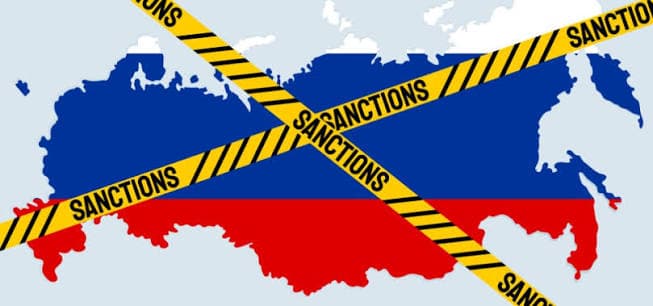

For centuries, sanctions—in some form or another—have been used as an instrument of economic pressure by nations and international bodies to punish noncompliant states. Conventional logic holds that sanctions reduce trade and impose economic pressure, leading to political concessions. Restricting trade can impose substantial economic costs, but those costs do not necessarily translate into the political concessions sought by sanctioning states. When states retain access to alternative markets, economic activity is often redirected either to third nations or domestic production, allowing the noncompliant state to continue trade with alternative suppliers and consumers or produce their own material without suffering the full costs intended by sanctioning states.
When third countries remain outside the sanctions regime, traditional economic incentives encourage alternative suppliers, consumers, and intermediaries to fill the vacuum created by sanctions. The historical case of sanctions against Italy during the Second Italo-Ethiopian War and contemporary evidence from sanctions against Russia demonstrate that the effectiveness of sanctions depends significantly on third-country participation and that, if a target nation can efficiently reallocate resources, sanctions rapidly lose their power. In both cases, alternative trading relationships reduced the extent to which sanctions could restrict the target nation’s access to the broader international market.
Substantial empirical evidence shows that sanctions often fail to achieve their intended political objectives. The Cato Institute, in a report on the existing debate over sanctions, cites that studies claim a success rate of 5-13% for unilateral sanctions. While more formal academic literature is somewhat more optimistic—Hufbauer et al. find at least a 34% success rate between 1914 and 1990—there is much debate over their definition of success. Robert Pape found that only one in eight of the cases Hufbauer cites as successes stand up to scrutiny. Regardless of the actual numbers, a substantial body of research finds that sanctions frequently impose economic costs that do not produce the political concessions sought by the sanctioning nation.
We can understand why alternative markets arise from sanctions using traditional basic economic principles. In 1935, the League of Nations imposed sanctions on Italy because of Mussolini’s invasion of Ethiopia. The sanctions involved participating members of the League of Nations, but did not eliminate Italy’s ability to obtain essential inputs from nations outside of the sanctions scheme. Iron ore provides a useful example. Italy’s demand for iron ore did not disappear with sanctions, of course; rather, restrictions on imports increased incentives to continue pursuing autarky. Historically, the demand curves for iron products at a national level are highly price inelastic, at least in the short term. As such, while prices for importing iron ore did go up, the amount of steel Italy used changed relatively little. Mussolini’s push for Italian autarky, combined with pressure from the sanctions, meant that Italy increased its domestic iron ore production by 52% during the eight months of the sanctions period. In 1934, before sanctions, Italy’s iron ore supply was split about 65-35 between domestic production and imports, and totalled about 900,000 tons. By 1936, Italy’s domestic production had shot up from 500,000 to 850,000 tons (430,000 tons of net iron content). While figures are not available for 1937, the net iron content of their domestically-produced ore is available: Italy went from 250,000 metric tons of net production in 1934 (extrapolated from Imperial Institute data) to 520,000 metric tons. In fact, Italy’s domestic reforms were so robust that the nation’s total steel production for 1936, even after eight months of sanctions, was only 9.6% lower than 1935.
The following table contains data sourced from a 1936 report from the Imperial Institute and B.R. Mitchell’s International Historical Statistics: Europe:
Italy and iron ore | 1934 (Mitchell) | 1935 (II) | 1936 (II) | ∆ (1934-1936) |
Domestic production (1000t) | 484 | 559 | 844 | 360 |
Net iron content (domestic) (1000t) | 251 | 280 | 430 | 179 |
Imports (1000t) | 290 | 184 | 40 | -250 |
Total ore supply (1000t) | 790 | 744 | 890 | 200 |
Domestic production as a percentage of total supply | 63.3 | 75.3 | 95.5 | 32.2 |
Source: Adapted from "The 1935 Sanctions against Italy: Would coal and oil have made a difference?" by Cristiano Ristuccia in European Review of Economic History, 2000, Vol. 4, No. 1 (2000)
Rather than eliminating Italy’s ability to acquire the raw materials necessary for industrial production, sanctions encouraged both substitution toward domestic production and continued trade with countries outside the sanctions regime. While much of Italy’s domestic production increase can be attributed to the Fascist government’s continued relentless pursuit of autarky, the 1935 sanctions were one of the factors that drove the government to push for increased domestic production. Rather than forcing Italy to the negotiating table, the actions of the League of Nations unintentionally helped push the nation to become self-sufficient in a key industry.
Coal provides a clearer example of the importance of third-country participation in situations where domestic production cannot make up sanctions-based supply shortfalls. Italy was heavily dependent on imported coal, meaning that a comprehensive embargo could theoretically have imposed severe costs on Italian industry. Yet Germany, which did not participate in the League’s sanctions, continued to supply Italy with massive amounts of coal.
While a coal embargo was never applied to Italy due to fears over war in 1935, historian Cristiano Ristuccia theorizes that Italian industry could have survived a coal embargo without being forced into political concessions, using the following data:
Italian coal supply, Nov 1935-Jun 1936 | Coal (million tons) |
Estimated domestic demand | 11 |
German imports | 4.7 |
Provision from railways | 2.9 |
Domestic production | 0.95 |
Total available supply | 8.55 |
Theoretical shortfall | 2.45 |
The shortage may not necessarily have translated into an equivalent reduction in industrial output because available coal could be directed toward strategically important industries, as in the proven case of iron ore. Ristuccia argues that even a coal embargo would probably not have been sufficient to force Mussolini to abandon the Ethiopian campaign. Germany’s willingness to trade effectively weakened one of the League’s most potentially powerful sanctions. Italy would likely have needed only a single trading partner—a nation that was already moving in the direction of becoming a strong ally—to overcome the political pressure of the sanctions regime imposed.
The same economic mechanism can be observed in the more recent sanctions imposed on Russia by much of the Western international community following the 2022 invasion of Ukraine. This modern sanctions regime is considerably broader than the League’s measures against Italy, but Russia has retained access to a large group of non-aligned countries that have not adopted the Western sanctions regime. Since 2022, Russian trade has consequently shifted away from Europe and toward countries including China, India and Turkey. The OECD’s analysis of Russian trade estimates that between July 2023 and June 2024, compared with the same period before the invasion, imports from Russia increased by 105% to China, 972% to India, and 90% to other OECD countries such as Turkey, Mexico and Israel. At the same time, Russian exports to Russia’s former Western markets fell dramatically: imports from Russia declined by 69% for the European Union and 81% for non-EU sanctioning countries. The overall pattern is therefore not one of Russia disappearing from international trade and being forced to make concessions, but of trade being redirected away from the political West.
Energy illustrates this redirection particularly well. Russia lost access to much of its traditional European market, but oil could be redirected relatively easily because of its ease of transport. India and China became major purchasers of Russian crude, often at discounted prices. In 2024, India accounted for approximately 34% of Russia’s crude oil exports, while China accounted for another 26%. Asia and Oceania together received 63% of Russian crude oil exports in 2024, compared with a much smaller share before the invasion. The sanctions therefore reduced the per-unit revenue Russia could receive for oil and increased the cost and complexity of transportation, but they did not eliminate Russia’s ability to sell its most important export commodity. While the Russian economy faces deep structural issues, high oil revenues have been one of the key factors shielding the nation from a recession, and have preserved an important source of revenue from the foreign market, reducing the degree to which sanctions alone can force Russia to the negotiating table.
Russia’s wider experience demonstrates both the strengths and weaknesses of this process. Sanctions have clearly reduced direct trade between Russia and sanctioning countries, and they have made obtaining certain advanced technologies substantially more difficult. Research finds that Russia has had more difficulty replacing technologically sophisticated imports than redirecting commodity exports. China, India and other third countries can replace some Western suppliers, but not every specialized product or technology. Nevertheless, Russian exports have proven much easier to redirect because commodities such as oil can be sold to a large number of potential buyers. A recent economic study by Flach et al. finds through a detailed simulation that, under deeper sanctions, Russian exports to China could theoretically increase by 16%, to Turkey by 14%, and to India by 12%, illustrating how new markets can absorb a substantial portion of the trade displaced by sanctions.
The key distinction provided by these two examples is the difference between lasting economic damage that forces concession and temporary economic hardship that can be alleviated by production or alternative sale. We see by Italy’s example that the unintentional application of the latter may in fact benefit a target nation, and by Russia’s example that alternative sale provides a means of survival under sanctions. Sanctions can impose substantial costs without producing the political concession demanded by the sender. Italy's experience demonstrates how import restrictions can encourage domestic substitution and reinforce an existing autarkic strategy, while Ristuccia's analysis shows that the effectiveness of an embargo depends critically on whether alternative suppliers remain available. Russia provides a contemporary example: Western sanctions have sharply reduced Russia's trade with sanctioning countries and constrained access to advanced technologies, but Russia has simultaneously redirected substantial commodity exports toward China, India, Turkey, and other third countries.
This does not mean sanctions are completely ineffective. They can raise transaction costs, reduce export revenues, restrict access to technology, and force countries to accept lower-quality or more expensive substitutes. Russia’s experience demonstrates that these costs can be significant. However, the central question is whether those costs are large enough to produce the political concession demanded by the sanctioning states—and we have seen that in many cases, they are not. If alternative markets remain available, the economic shock is distributed rather than concentrated entirely on the target state. Russia can sell oil to India instead of Europe, Italy could have purchased coal from Germany instead of Britain or France, and goods subject to restrictions can potentially move through intermediary countries. Sanctions do not destroy domestic demand for materials, and they do not destroy international demand for export products. Alternative markets can substantially mitigate the economic impact of sanctions, particularly for highly homogeneous commodities, and although significant costs are often imposed, nations that effectively reallocate resources towards domestic production, as did Italy, or that rapidly shift to new international trade partners, as did Russia, can survive sanctions without forced political concession. This is why members of coalitions of nations that intend to impose sanctions cannot defect if sanctions are to work. Deviations from a sanctions regime, like President Trump’s recent deal with the Russian government to resume the sale of Russian diesel, only damage the ability of sanctions to cause any lasting or significant political change.
Rahul Sundaresan is Deputy Editor-in-Chief of the Consilium and a first-year Economics and Politics student. He writes weekly on international economics, political economy, and economic history.